

The iFood Way of Building Products: how we structure problems before scaling solutions
A manifesto on how we create products that evolve fast and transform the world.
Extraordinary products are not born ready. They evolve with each decision.
At iFood, building products means dealing with a living ecosystem, where technology, operations, and business move simultaneously.
The iFood Way of Building Products (JIP) organizes this complexity. It’s not just a set of practices. It’s the criterion that guides how we think, prioritize, and evolve.
It shortens the distance between idea and learning. It provides rhythm without losing direction. And it allows us to move fast without losing consistency.
For us, building products starts with a simple discipline: learn fast, adjust fast, and decide with context. It’s about transforming complex challenges into solutions simple enough to fit into the lives of millions of people, while maintaining the ability to evolve continuously.
We Dream Big and Start Small
Dreaming big is part of ambition. Starting small is part of responsibility.
At iFood, we don’t wait for perfection to test. We validate early, learn from real data, and only then scale up. Speed here is not haste; it’s clarity of direction combined with execution discipline.
The Jet Ski method reflects this logic. It structures lean teams to test hypotheses in short cycles before any scaling decision.
The priority is not to launch big. It’s to reduce uncertainty first.
After all, great products emerge from the sum of these small decisions.
We Guide Our Path with Data
Intuition helps formulate hypotheses. Data helps make decisions.
At iFood, all decisions are made based on data. Before discussing the solution, we investigate the cause.
Before prioritizing, we understand the context.
Metrics don’t serve to validate opinions, but to reveal what’s really happening.
Product is behavior in motion. That’s why we measure, experiment, and adjust continuously. Tracking numbers means understanding variations, identifying patterns, and acting based on what actually drives results.
Deciding with data is reducing uncertainty and increasing the quality of choices.
We Go Beyond the Screen
Charts show what’s happening. The streets explain why.
Relevant products are born from observing search patterns, the diversity of catalogs, chat conversations, street logistics, and the invisible decisions that sustain operations.
Each metric represents real people.
Going beyond the screen means leaving the dashboard, listening, observing, and testing in the real world. Only then is it possible to create solutions that solve real problems and remain relevant when context changes.
We Build Bridges
iFood is an ecosystem. Our products and channels evolve autonomously, but they amplify each other when connected. Building products here also means creating bridges between teams, contexts, and experiences, so that each solution generates value beyond its own space.
Building bridges is understanding how technical decisions impact operations, how business choices affect experience, and how small changes can reverberate across multiple fronts.
It’s about articulating areas, aligning contexts, and anticipating side effects. Systemic vision is not optional. It’s a condition for scaling with quality.
We Build Products with a Business Soul
Every product decision is also a business decision.
A good product needs to work for those who use it and move the right levers, such as growth, efficiency, retention, and value generation.
This requires conscious choices about where to invest, when to accelerate, and when to adjust course.
Building products with a business soul is balancing experience, sustainability, and scale, always with a focus on results.
It’s making decisions with the long term in mind while maintaining the ability to adapt.
Good products solve. Excellent products scale.
A Culture in Motion
JIP was not born from a document. It was born from practice and took shape as iFood grew.
Over time, it came to guide not only how we develop products, but also how we hire, form teams, and make day-to-day decisions. It creates alignment about what we value, how we prioritize, and what kind of thinking we seek to strengthen.
It continues to evolve because context changes, people change, and challenges change. Sharing it means opening our way of thinking about product: with ambition, responsibility, and discipline.
In the end, the iFood Way of Building Products is this: structuring problems with clarity so that solutions can scale with consistency.
Build the future at iFood
We are always looking for passionate developers, designers and data scientists to help us revolutionize the food delivery experience. Join iFood Tech and be part of building the future of food technology.
Discover our Careers
You might also like to read
Read more about Product & Design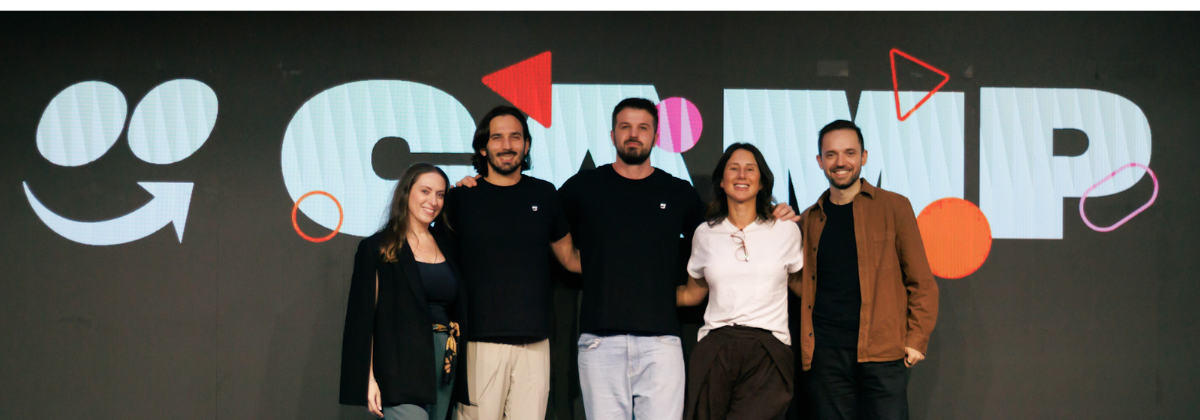
iFood Camp: how AI, behavior and Brazilianness are reshaping the way we build products
With leaders from iFood, OLX and Grupo Boticário, the event discussed AI, hyperpersonalization and the challenges of building technology in the Brazilian context Artificial intelligence, behavior and cultural context were at the center of discussions at the first edition of…

iFood AI: behind the scenes of building the product
Building from the unknown When Eric Ries wrote "The Lean Startup", he taught us that "the only way to win is to learn faster than anyone else". Our journey building iFood's AI Assistant is the living embodiment of this principle.…


Ailo: from experiment to product with purpose
Over the past few months, Ailo, our AI agent for consumers, has evolved from a small experiment into a product with purpose. If you missed our previous posts where we shared the creation process of this AI agent, we recommend…
Meet other Authors
Each article is the result of the vision and expertise of our authors. See who contributes to our blog: