
iFood Camp: how AI, behavior and Brazilianness are reshaping the way we build products
With leaders from iFood, OLX and Grupo Boticário, the event discussed AI, hyperpersonalization and the challenges of building technology in the Brazilian context
Artificial intelligence, behavior and cultural context were at the center of discussions at the first edition of iFood Camp, a meeting promoted by iFood to discuss current challenges in building digital products.
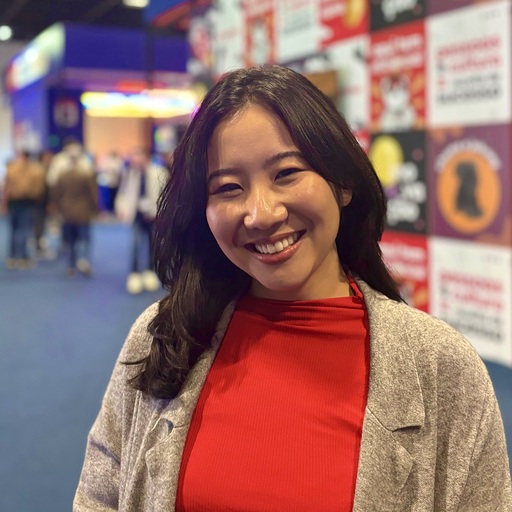
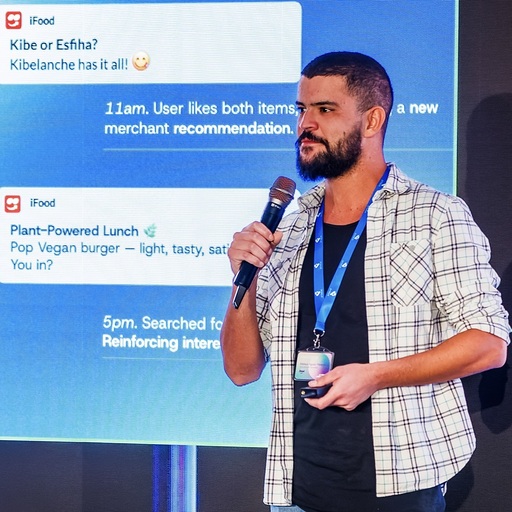
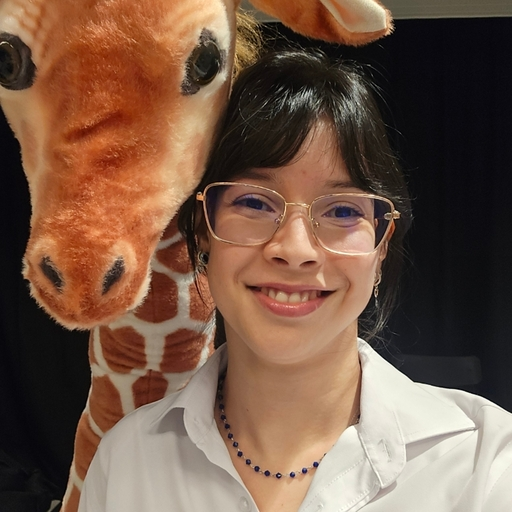
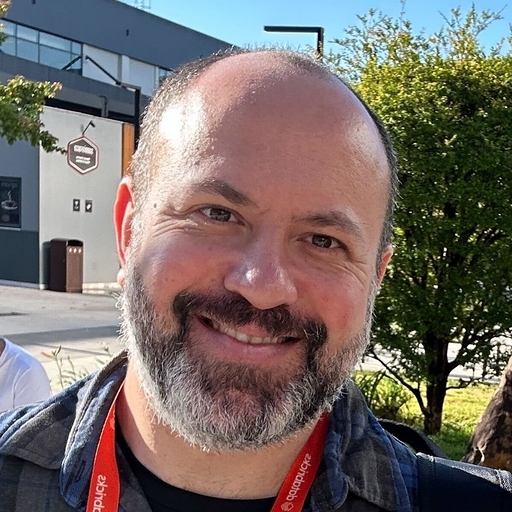
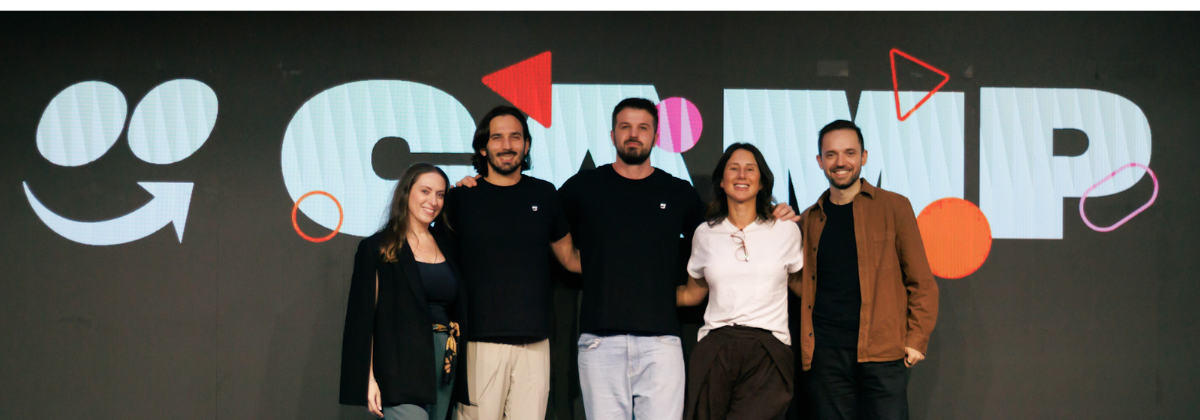
Held on March 10th, the event marked the company’s 15th anniversary and brought together leaders from companies at the forefront of technology and product development in Brazil. Participants included Bel Araújo, Design and Product Director, Lucas Montez, Tech Growth Director (both from iFood), Lilian Ferraz, Chief Product Officer at OLX Brasil, and Renato Pedigoni, Chief Technology Officer at Grupo Boticário. The session was moderated by Bruno Parizotto, Senior Group Product Manager at iFood.
Over more than two hours of content, participants discussed topics such as hyperpersonalization, application of artificial intelligence in digital products, and the impact of Brazilian market particularities on how technology is developed and scaled.
More than presenting trends, the meeting sought to share perspectives from those dealing directly with these challenges and transforming technological advances into relevant experiences for millions of people.
The Opening: A Milestone for Sharing How We Build Products
The event opening was led by Bel Araújo, Design and Product Director at iFood, who contextualized iFood Camp as an initiative created to expand exchanges with the market during a time of accelerated transformation.
The proposal is for iFood Camp to become a continuous space for discussion about technology, product and data, bringing together people facing similar challenges in their daily work.
In presenting this positioning, Bel reinforced the intention to build a recurring forum where practical learnings can be shared as the industry evolves.
Additionally, she was also responsible for presenting the iFood Way of Building Products (JIP). The initiative was described by her as “the compass that guides the company’s decisions,” and is defined by the five pillars below:
Dream big, start small
Guide the path with data
Go beyond the screen
Build bridges
Build products with a business soul
JIP is not just a framework. At the event, it was presented as a way to organize complexity: keeping feet on the ground without losing ambition, providing speed without compromising context, and evolving products by connecting users, business and ecosystem.
AI Starts with Data. And Data Represents Behavior
Next, Lucas Montez, Tech Growth Director at iFood, deepened one of the central themes of the evening: the relationship between artificial intelligence, behavior and Brazilianness.
Talking about AI means talking about systems that learn from data. And that data, in practice, is records of human behaviors. Therefore, understanding behavior is not an accessory layer of the product. It’s a central part of the intelligence that sustains truly relevant experiences.
In the Brazilian context, this dimension is even deeper. As Lucas said, “Brazil is not a homogeneous reality.”
“(Brazil) is a country marked by cultural, regional, linguistic and social variations that change how people search, choose, consume and interact with digital products”
Examples from iFood itself illustrate this reality: there are items with different names in different regions of the country. There are also consumption habits that vary according to local context and payment preferences deeply connected to the country’s reality, just to cite a few cases.
When product and technology can capture these nuances, data helps guide decisions and improve user experience.
AI, Hyperpersonalization and the Challenge of New Product Journeys
During the event, Lucas Montez presented the Large Commerce Model (LCM), iFood’s proprietary artificial intelligence model trained with real, anonymized data that reflects the diversity of behaviors in Brazil. The proposal is to transform signals from platform usage (such as purchase frequency, food preferences, order times and price sensitivity) into a foundation for creating more contextual and personalized experiences.
In this scenario, hyperpersonalization is no longer just about showing different recommendations to each person. It becomes about better understanding each user’s context and translating that reading into more relevant and fluid journeys.
At the same time, as Bel Araújo highlighted, this advance also changes the very way of structuring digital products. For years, experiences were organized in relatively predictable flows, with clear sequences of pages and steps. With the increasing use of AI, these journeys tend to become less linear and more modular, shortening paths, integrating services and adapting interactions in real time.
This new scenario expands possibilities, but also complexity. The more data and personalization capacity, the greater the challenge of transforming this intelligence into experiences that truly generate value for users and for the business.
Technology Built from the Brazilian Context
In the second part of the event, Renato Pedigoni, CTO of Grupo Boticário, and Lilian Ferraz, CPO of OLX Brasil, joined Bel Araújo and Lucas Montez in a roundtable discussion moderated by Bruno Parizotto, Senior Group Product Manager at iFood.
One of the panel’s central themes was the advantage of developing technology considering the specificities of the Brazilian market. For Renato, this complexity appears on multiple fronts in the case of Grupo Boticário: different brands, physical and digital channels, an extensive network of partners and a highly integrated chain. In this context, technology and AI are fundamental to personalize experiences and optimize decisions at scale.
Lilian highlighted another central element for digital platforms: trust. In OLX’s case, understanding language, regional context and behavioral patterns is essential to create safe experiences.
The conversation also addressed the role of hyperpersonalization, which today goes beyond traditional recommendations or segmentations. With more data and interpretation capacity, products can accompany the user throughout the entire journey, not just at the transaction moment.
As an example, Lilian cited an OLX feature where AI simplifies ad creation from photos, which reduces friction and increases conversion. Renato spoke about Grupo Boticário initiatives that seek to bring digital closer to the service experience built in physical stores, connecting purchase history and preferences across channels.
The statements pointed in the same direction: using intelligence and context to build more relevant experiences, without losing sight of what really works for those at the end of the line.
When Building Gets Easier, Deciding Well Becomes the Differentiator
In the final part of the conversation, the panel discussed how artificial intelligence is changing the way products are built. With the cost of developing technology increasingly lower, the differential shifts from technical feasibility to the ability to identify relevant problems and connect technology to business value.
Bel highlighted how this scenario accelerates decision cycles and expands access to knowledge within teams. Renato brought the engineering perspective, with productivity gains from using agentic flows in code generation. Lilian pointed to a future where products can anticipate user needs, while Lucas reinforced that if building becomes cheaper, deeply understanding what people want becomes even more strategic.
In this context, the idea of the “builder” profile gained strength throughout the panel: professionals capable of identifying problems, testing paths and using available tools to build end-to-end solutions. More than executing isolated tasks, the focus becomes solving problems with context, autonomy and speed.
The Future of Building Digital Products
The iFood Camp discussions made it clear that artificial intelligence, hyperpersonalization and behavioral analysis are already redefining how digital products are conceived and built.
The conversations between leaders from iFood, OLX and Grupo Boticário showed that in a market like Brazil’s, developing technology requires more than applying global models. It’s necessary to understand context, interpret data with depth and translate these learnings into relevant experiences for millions of people.
From the use of proprietary AI models to the evolution of product journeys, including impacts on careers and technology teams, the event provided an overview of how companies are dealing in practice with the challenges and opportunities of this new moment in the industry.

Chapter de Produto
Autor dedicado às publicações que são desenvolvidas pelo chapter de Produto do Ifood.
Construa o futuro no iFood
Estamos sempre em busca de desenvolvedores, designers e cientistas de dados apaixonados para nos ajudar a revolucionar a experiência de entrega de alimentos. Junte-se à iFood Tech e faça parte da construção do futuro da tecnologia alimentar.
Conheça nossas Carreiras
Você também pode gostar de ler
Ler mais sobre Product & Design
O Jeito iFood de Fazer Produto: como estruturamos problemas antes de escalar soluções
Um manifesto sobre como criamos produtos que evoluem rápido e transformam o mundo. Produtos extraordinários não nascem prontos. Eles evoluem a cada decisão. No iFood, fazer produto é lidar com um ecossistema vivo, onde tecnologia, operação e negócio se movem…
iFood Camp: como IA, comportamento e brasilidade estão redesenhando o jeito de construir produto
Inteligência artificial, comportamento e contexto cultural estiveram no centro das discussões da primeira edição do iFood Camp, encontro promovido pelo iFood para discutir os desafios atuais da construção de produtos digitais. Realizado no dia 10 de março, o evento marcou…

Ailo: de experimento a produto com propósito
Texto escrito em parceria com Valéria Romano, Gerente Sênior de Produto & Design. Nos últimos meses, Ailo, nosso AI agent para consumidores deixou de ser apenas um pequeno experimento e vem se tornando um produto com propósito. Se você perdeu nossos posts anteriores…

Conheça outros Autores
Cada artigo é resultado da visão e expertise dos nossos autores. Veja quem contribui com nosso blog: